
No-Code Automation Tools Replacing Employees: Myth or Reality?
In a remarkable development, no-code automation tools like Zapier and Gumloop are transforming workflows across industries, leading many to ask: “Are no-code automation tools replacing employees?” According to a WeWeb report, 79% of business leaders predict that generative AI will enhance automation efficiency by 25% or more. But does this shift mean human jobs are at risk, or are these tools merely augmenting human capabilities?
The Current State of No-Code Automation Tools
The adoption of no-code automation tools has surged, driven by the promise of faster deployment and reduced IT dependency. Platforms like Zapier, Gumloop, and n8n Workflow Automation Services allow users to create complex workflows through simple drag-and-drop interfaces, connecting thousands of applications without a single line of code. Zapier alone integrates with over 4,000 web apps learn more.
The capabilities of these tools extend beyond simple task automation. With the integration of AI and machine learning, platforms like Gumloop and Vellum are utilizing Large Language Models (LLMs) such as GPT to execute reasoning within workflows, making decisions that go beyond the classic if-this-then-that logic. This evolution is transforming how repetitive tasks like lead syncing, invoice processing, and even employee onboarding are handled, allowing businesses to focus human resources on more strategic roles learn more.
However, while these tools excel in handling routine and rule-based tasks, they are not yet equipped to completely replace the nuanced judgment and creativity that human roles often require. This has led to the incorporation of “human-in-the-loop” features that allow for manual oversight, ensuring critical decisions remain firmly in human hands learn more.
No-Code Automation Tools Replacing Employees: Key Signal #1 – Integration and Efficiency
Integration capabilities of no-code automation tools are a significant driver in their increasing adoption. Workato, for instance, offers over 1,000 integrations and boasts a 10x faster automation creation process compared to traditional methods learn more. These robust integration capabilities enable seamless data movement and process automation across various business functions, from ticket routing to notifications.
This integration efficiency allows companies to deploy automated solutions in days rather than months, significantly reducing dependency on IT departments. As a result, business teams can take more direct control of automating their processes, allowing IT resources to focus on more complex, technical challenges. The Vellum AI Guide supports this, highlighting how no-code AI workflow automation tools enable faster deployment and reduce IT dependency learn more.
The prediction that generative AI will boost process automation efficiency by 25% or more, as noted by WeWeb, underscores the potential for significant operational improvements. As these tools become more sophisticated, the expectation is that they will continue to automate more complex tasks, further enhancing efficiency and potentially shifting the nature of human work towards more strategic and creative endeavors.
Key Signal #2 – Artificial Intelligence and Large Language Models
The integration of AI and Large Language Models (LLMs) like GPT into no-code platforms is a game-changer. These models allow for more complex decision-making processes to be automated, expanding the scope of what these tools can achieve. Unlike traditional automation tools that rely on static rules, AI-native platforms like Gumloop and Vellum can handle dynamic, context-based decisions, opening new possibilities for automation learn more.
For example, AI-driven automation can now interpret natural language inputs to build entire workflows, significantly reducing setup times from days to mere minutes. This capability not only speeds up process integration but also democratizes access to automation, enabling employees without technical expertise to create and manage workflows efficiently learn more.
Moreover, these AI-enhanced tools are increasingly capable of handling exceptions and making real-time adjustments, roles traditionally reserved for human employees. While this indicates a step towards replacing certain aspects of human work, the necessity of human oversight remains critical, particularly for tasks requiring creativity, strategic planning, and ethical considerations.
Key Signal #3 – Human-in-the-Loop Automation
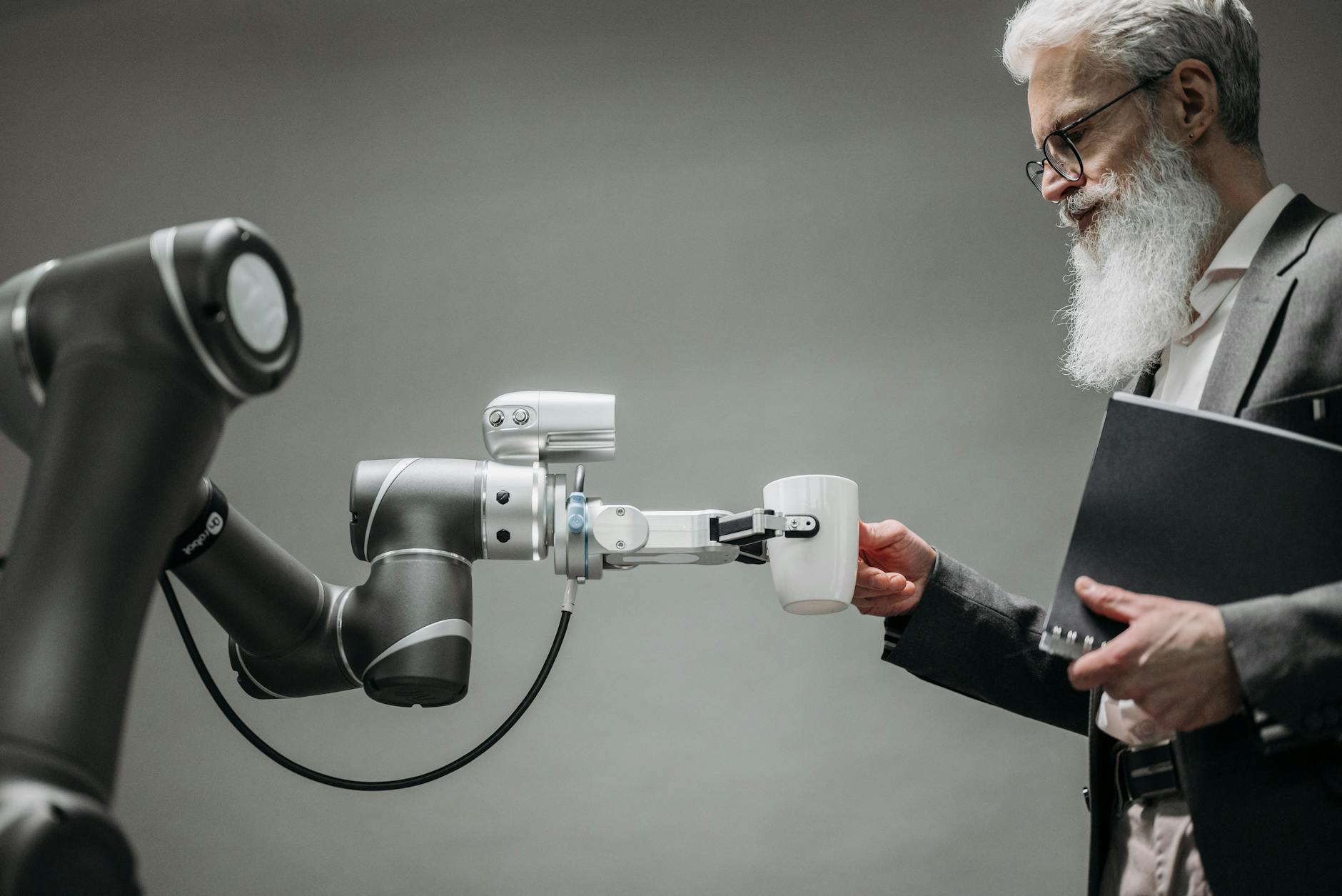
Despite the advancements in AI and automation, the concept of human-in-the-loop remains crucial. As automation tools advance, they are designed to complement rather than completely replace human roles. This is particularly true for processes requiring critical thinking and nuanced judgment, areas where AI still falls short.
No-code tools are incorporating features that allow humans to intervene in workflows to approve decisions or handle exceptions. This ensures that while routine tasks are automated, critical decision-making remains under human control. Such systems are particularly beneficial in sectors like finance and healthcare, where the stakes of automated decisions are significantly high learn more.
Moreover, the ‘human-in-the-loop’ approach positions employees as supervisors of automation, ensuring that workflows are not only efficient but also aligned with strategic goals. This shift is not about replacing employees but empowering them to focus on more value-added tasks, thereby enhancing overall organizational productivity and job satisfaction.
Expert Perspectives
“No-code AI workflow automation tools help: Faster deployment: Launch AI-powered workflows in days, not months. Reduced IT dependency: Empower business teams to automate without code.” – Vellum AI Guide
“79% of leaders believe generative AI will improve their process automation efficiency by at least 25%.” – WeWeb No-Code Automation Guide
“Workato claims they make creating automations 10 times faster than other solutions.” – Unito Blog on Workflow Tools
Business Implications of No-Code Automation Tools Replacing Employees
The growing capabilities of no-code automation tools present both opportunities and challenges for businesses. On one hand, the ability to automate repetitive tasks and integrate complex workflows efficiently can lead to significant cost savings and productivity gains. Companies can reallocate resources to more strategic areas, such as innovation and customer engagement.
However, the rise of automation also necessitates a reevaluation of employee roles. As routine tasks are automated, there is a pressing need for employees to upskill and focus on areas that require human creativity and strategic input. This shift requires organizations to invest in employee training and development programs to ensure that their workforce is prepared for the tasks of tomorrow.
Furthermore, businesses need to adopt a balanced approach, leveraging automation to enhance efficiency while maintaining the human touch in areas where it is most needed. This balance is crucial for maintaining customer trust and ensuring ethical decision-making in automated processes. Companies that successfully integrate human-in-the-loop systems will likely see the greatest benefits from automation, both in terms of operational efficiency and employee engagement.
Actionable Predictions
- By 2025, no-code automation tools will handle up to 50% of routine business processes, significantly altering the structure of administrative roles.
- Companies that invest in AI-enhanced no-code platforms will realize a 30% increase in operational efficiency compared to those relying on traditional methods.
- The demand for roles focused on overseeing and managing automated workflows will grow, requiring a workforce that is skilled in both automation technology and strategic decision-making.
Next Steps for Readers
To prepare for this shift, businesses should start by evaluating their current workflows to identify areas that can be automated. Investing in no-code automation tools like AI Chatbot Solutions can provide a competitive edge by streamlining operations and enhancing customer interactions.
Additionally, fostering a culture of continuous learning and adaptation will be essential. Organizations should prioritize training programs that equip employees with the skills needed to thrive in an increasingly automated environment. By embracing these changes proactively, businesses can not only safeguard their workforce but also position themselves as leaders in their respective industries.
Future-proof your business. Orchient builds automation systems that scale with emerging trends, ensuring your organization’s readiness for the technology-driven changes on the horizon.