

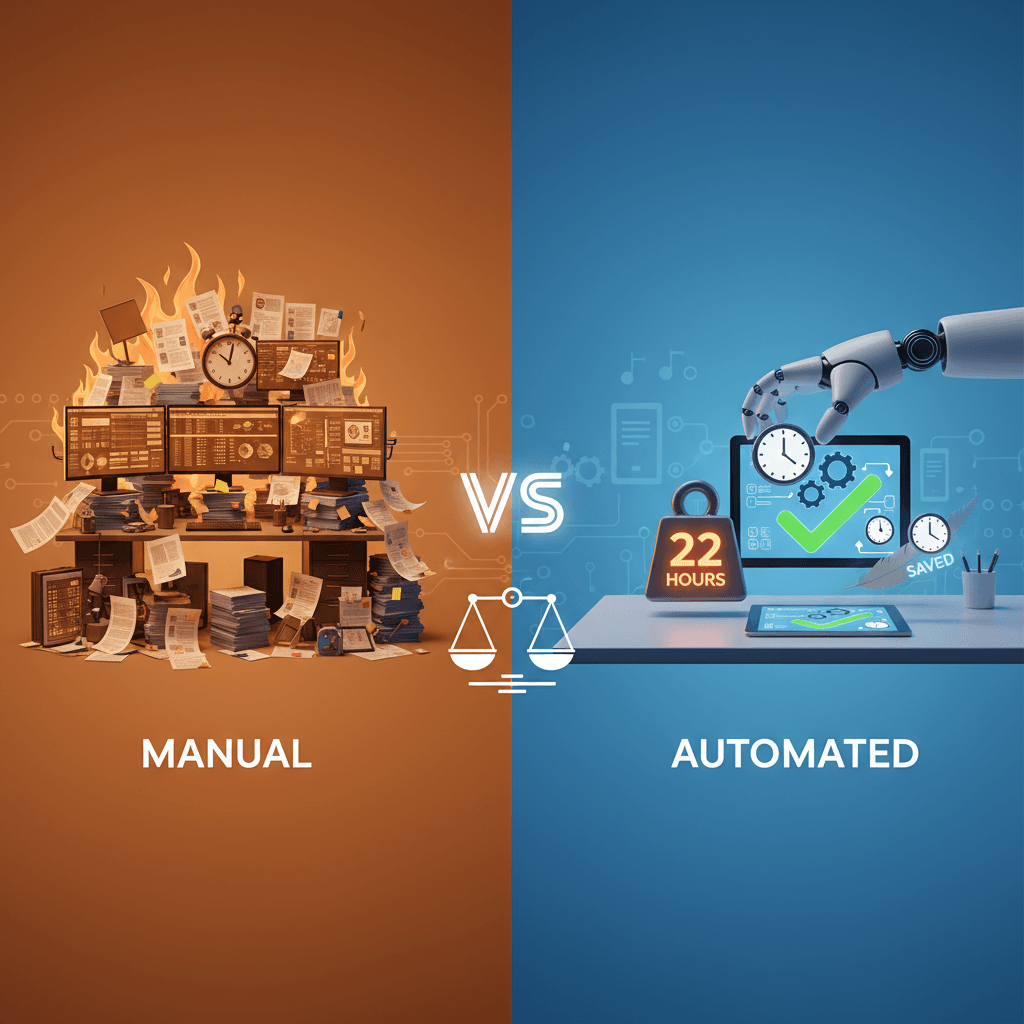
Why Ecommerce Automation Case Study Results Are Reshaping How Merchants Choose Their Stack in 2025
If you’ve been researching workflow tools for your online store, you’ve likely encountered the same tension: do you invest in a comprehensive, enterprise-grade platform like Zapier, or do you build on a flexible, self-hostable engine like n8n? The answer matters more than ever because ecommerce automation case study results published in 2024–2025 reveal staggering performance gaps between businesses that chose the right tool and those that didn’t. We’re talking about operations scaling from $10M to $350M in three years, monthly costs dropping 70%, and order resolution times collapsing from 60 minutes to under one minute. This comparison gives you the analytical framework to make the right call before you commit budget and engineering hours.

TL;DR Quick Verdict: Zapier wins for non-technical teams needing fast deployment and a massive app library. n8n wins for technical teams, high-volume operations, and businesses where data privacy or cost-at-scale is a concern. For serious ecommerce automation — the kind that delivers the ecommerce automation case study results cited in this article — n8n’s flexibility and economics are hard to beat beyond a certain transaction threshold.
Option A Deep-Dive: Zapier — The No-Code Workhorse
Zapier launched in 2011 and has since become the default automation layer for millions of small businesses. Its core proposition is accessibility: connect over 6,000 apps through a point-and-click interface, with no coding required. For ecommerce merchants on Shopify, WooCommerce, or BigCommerce, Zapier offers pre-built “Zaps” covering everything from abandoned cart notifications to inventory sync and post-purchase review requests.
The platform’s strength is its breadth. You can wire together your CRM, email marketing platform, fulfillment service, and helpdesk in an afternoon. Zapier’s multi-step Zaps, conditional logic (Paths), and built-in formatter tools handle the majority of mid-complexity workflows without writing a single line of code. For teams without dedicated developers, this is genuinely transformative.
However, Zapier’s pricing model becomes a significant liability at scale. The platform charges per “task” — each action in a Zap counts as one task. A high-volume ecommerce store processing 10,000 orders per month, each triggering a five-step workflow, consumes 50,000 tasks monthly. At that volume, you’re looking at enterprise pricing territory fast. This is precisely why many businesses that initially celebrate their ecommerce automation case study results on Zapier eventually migrate when growth kicks in.
Zapier also runs exclusively as a cloud-hosted SaaS, meaning your data flows through Zapier’s servers. For businesses handling sensitive customer PII, payment data, or operating under GDPR constraints, this creates compliance overhead. Error handling, while improved in recent years, can still feel opaque — debugging a failed Zap mid-order-rush is not a pleasant experience.
Best for: SMBs under 5,000 monthly orders, non-technical founders, teams needing rapid deployment, and businesses where the app library breadth outweighs cost concerns.
Option B Deep-Dive: n8n — The Developer-First Automation Engine Delivering Ecommerce Automation Case Study Results at Scale
n8n (pronounced “nodemation”) is an open-source workflow automation tool that launched in 2019 and has rapidly matured into a serious enterprise contender. Unlike Zapier, n8n can be self-hosted on your own infrastructure — a critical differentiator for data-sensitive ecommerce operations. It also offers a cloud-hosted option for teams that want managed infrastructure without the self-hosting overhead.
Where n8n truly separates itself is in execution flexibility. Workflows are built visually, but each node can be extended with custom JavaScript or Python, meaning you’re never blocked by what the platform natively supports. For complex ecommerce operations — think multi-warehouse inventory routing, dynamic pricing triggers, or AI-assisted customer segmentation — this extensibility is the difference between a workaround and a clean solution.
The ecommerce automation case study results that most impress analysts tend to come from n8n implementations. Consider the data: one documented case saw product throughput increase from 4,000 to 18,000 items daily — a 350% improvement — through workflow automation that required custom logic n8n handled natively. Another implementation reduced per-transaction processing costs by 70%, dropping monthly operational overhead from $20,000 to under $6,000. These are the kinds of numbers that justify a migration project.
Our own n8n Workflow Automation Services consistently show that ecommerce clients benefit most from n8n’s ability to handle branching logic, webhook-driven real-time triggers, and native integrations with databases and APIs that Zapier either doesn’t support or charges premium rates to access.
The learning curve is real. Non-technical users will find n8n more demanding than Zapier, and self-hosting requires DevOps competence. But for businesses serious about automation ROI — the kind that generates 285% first-quarter returns documented in published case studies — n8n’s economics and power are compelling. To explore how real businesses achieved these outcomes, learn more from Arcanus’s detailed ecommerce automation breakdown.
Best for: Technical teams, high-volume merchants, data-privacy-conscious businesses, and any operation where custom logic, cost control, or self-hosting are non-negotiable.
Feature-by-Feature Comparison Table
| Feature | Zapier | n8n |
|---|---|---|
| App Integrations | 6,000+ native connectors | 400+ native + unlimited via HTTP/API |
| Self-Hosting Option | No (cloud only) | Yes (Docker, VM, bare metal) |
| Custom Code Support | Limited (Code step, basic JS) | Full JavaScript & Python per node |
| Pricing Model | Per task (scales steeply) | Per workflow execution (flat or self-hosted free) |
| Technical Skill Required | Low (no-code friendly) | Medium–High (developer preferred) |
| Error Handling | Basic retry + email alerts | Advanced error workflows, custom fallback logic |
| Real-Time Webhooks | Yes (with polling delays on lower plans) | Yes (instant, no polling) |
| Data Privacy / GDPR | Data passes through Zapier servers | Full data sovereignty when self-hosted |
| AI / LLM Integration | Basic OpenAI node | Deep LangChain, OpenAI, custom AI agents |
| Ecommerce-Specific Templates | Extensive pre-built Zap library | Growing template library, community workflows |
| Version Control | Limited history | Full workflow versioning + Git integration |
| Support | Email, chat, large community | Community forum, cloud plan support, enterprise SLA |
Pricing Comparison: Real Numbers That Change the Decision
Pricing is where these two platforms diverge most sharply for growing ecommerce operations.
| Plan Tier | Zapier (USD/month) | n8n Cloud (USD/month) | n8n Self-Hosted |
|---|---|---|---|
| Free | $0 (100 tasks/mo) | $0 (trial) | Free (unlimited) |
| Starter | $19.99 (750 tasks/mo) | $20 (2,500 executions/mo) | Server cost only (~$5–20/mo VPS) |
| Professional | $49 (2,000 tasks/mo) | $50 (10,000 executions/mo) | Server cost only |
| Team / Business | $299–$599/mo (50K–100K tasks) | $120 (50,000 executions/mo) | Enterprise license available |
| High Volume (500K+ actions/mo) | $1,000+/mo (custom) | Custom pricing | Infrastructure cost only |
For a mid-size ecommerce business running 50,000 automated actions per month, Zapier costs 2.5–5x more than n8n Cloud, and potentially 15–20x more than a self-hosted n8n instance on a modest VPS. When you stack this against ecommerce automation case study results showing 70% cost reductions, the tool choice is itself part of the cost equation.
Use Case Recommendations: Which Platform Fits Your Scenario?
Choose Zapier if:
- You’re a solo founder or small team with no developer resources
- You process fewer than 5,000 orders per month and don’t anticipate rapid scaling
- You need to connect obscure SaaS tools that only exist in Zapier’s 6,000-app library
- Speed to deployment matters more than long-term cost optimization
- Your workflows are linear and don’t require complex branching or custom logic
Choose n8n if:
- You have a developer on staff or work with an automation agency
- You process high volumes where per-task pricing becomes prohibitive
- You need self-hosting for GDPR compliance or data sovereignty
- You want to integrate AI agents — pairing n8n with our AI Chatbot Solutions creates powerful customer-facing automation layers
- Your roadmap includes the kind of transformative ecommerce automation case study results — 185% conversion lifts, 99% error reductions — that require custom workflow logic
- You want full version control and auditability of your automation stack
Real-world evidence backs this framework. Thrive Automation’s RPA implementation for ecommerce customer delisting saved 14+ hours per week — outcomes they describe as an example of how “small to medium-sized ecommerce businesses can leverage the power of RPA in a cost-effective way that yields an incredible ROI.” You can learn more about their methodology. Similarly, NestX Agency’s lead automation work achieved 285% ROI in a single quarter, with abandoned cart recovery alone generating 23% of monthly automated revenue — learn more about their conversion-focused approach.
Migration Considerations: Switching Platforms Without Breaking Your Store
If you’re currently on Zapier and considering a move to n8n, plan for a phased migration rather than a hard cutover. Start by auditing your existing Zaps — categorize them by complexity and volume. Simple linear workflows migrate in hours; complex multi-branch automations with custom formatters require rebuilding and testing. Allocate two to four weeks for a full migration on a store with 20+ active workflows.
Key migration steps include: documenting all trigger events and expected outputs, rebuilding workflows in n8n’s staging environment, running parallel execution for one to two weeks to validate parity, then cutting over trigger by trigger. For ecommerce operations, prioritize order processing and customer communication workflows first — these carry the highest business risk if errors occur during transition.
The investment is worthwhile. Businesses that complete the migration consistently report the kind of ecommerce automation case study results that justified the project: lower ongoing costs, better error visibility, and the headroom to build more sophisticated automations that drive real revenue outcomes.
Final Recommendation: Matching the Tool to Your Automation Ambition
After reviewing the data, the verdict is nuanced but clear. Zapier is the right starting point for ecommerce businesses in their first year of automation — it removes friction, ships fast, and its app library is unmatched. But the published ecommerce automation case study results that produce headline numbers — 350% throughput increases, 3,400% revenue growth over three years, 70% cost reductions — consistently emerge from operations that outgrew Zapier’s model and moved to more powerful, cost-efficient infrastructure. n8n is that infrastructure for most serious ecommerce operations.
The businesses achieving transformational ecommerce automation case study results share a common trait: they chose tools that could scale with their ambition, not tools that constrained it. Whether you’re evaluating your first automation workflow or planning a platform migration, the right choice today determines your operational ceiling tomorrow.
Still deciding? Orchient helps businesses choose and implement the right automation stack.